The Case for Imperfect Content
AI-polished content is everywhere in deep tech. It is clean, grammatically correct, and completely forgettable. This article argues that the slight imperfections of genuinely human content are not flaws to correct but signals that build trust with the audience you actually want.
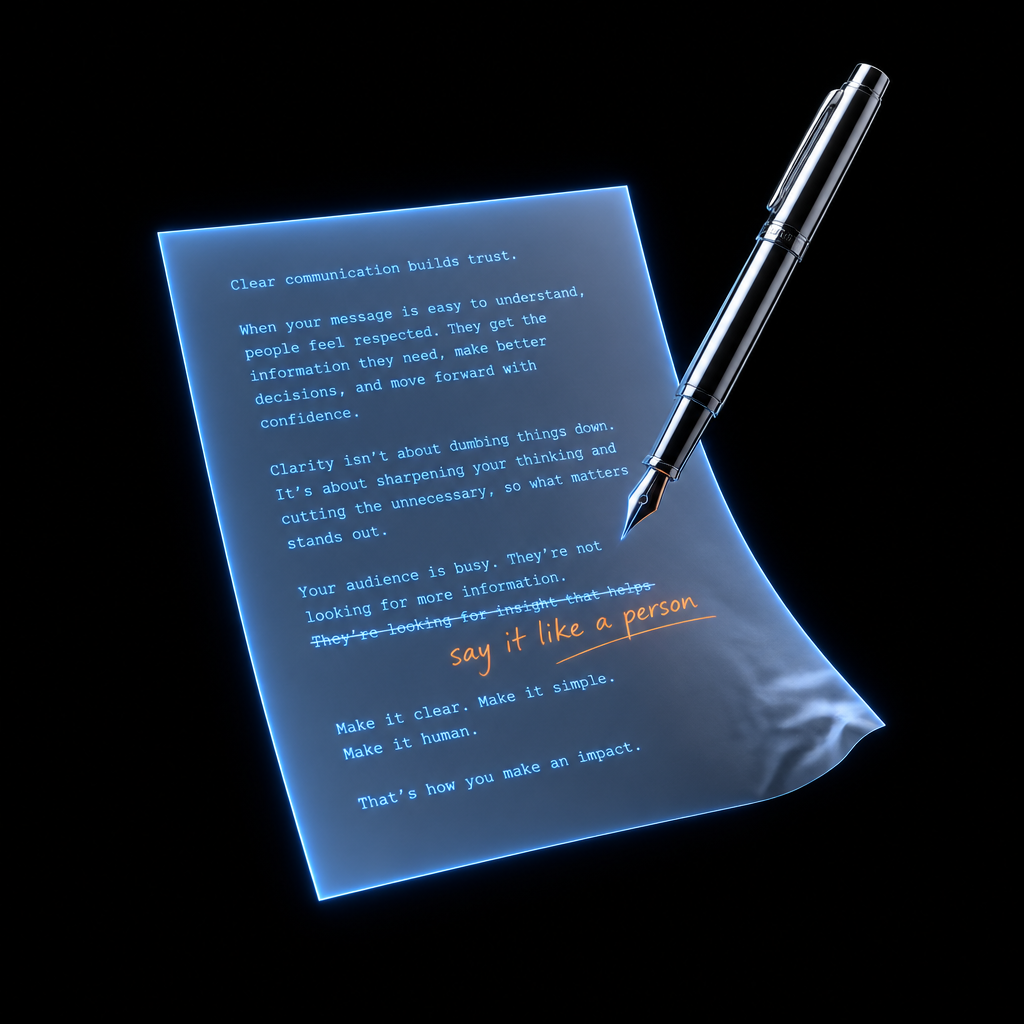
The Texture That Tells Readers Nobody's Home
There's a specific texture to AI-assisted content that deep tech audiences are beginning to recognise. The rhythm's too even. The transitions are too smooth. The vocabulary clusters around the same small set of words. It reads like content produced by a system optimising for correctness rather than by a person who has something specific to say.
Founders in biotech and deep tech are particularly exposed to this problem because the subject matter is already dense. If the writing's also clinical and perfectly structured, the reader is doing double work: processing complex science through copy that gives them no human signal to hold onto. They finish the article and remember very little of it.
Protect the Human Moments Through the Edit
Read the draft before you edit it for correctness. Ask whether it sounds like a human being. If it does, protect that quality through the editing process. If a sentence sounds like a document rather than a person, rewrite it until it sounds like something you'd say in a meeting.
The audience you're trying to reach in deep tech and biotech is sophisticated. They can tell the difference between a brand that's communicating and one that's producing content. The imperfect version is usually the one that communicates.
The Imperfections Are the Signal
Human connection in content thrives on slight imperfections. This isn't a romantic idea about authenticity. It's a practical observation about how trust forms in written communication. The imperfections are the signals that tell a reader there's a person behind the words, and people remember how a piece of content made them feel far longer than they remember how clean the grammar was.
The specific imperfections that matter aren't errors. They're the natural edits. The sentence that trails slightly before landing its point. The opinion stated without hedging. The word that's more informal than the surrounding copy expected. The paragraph that's shorter than you thought it needed to be. These elements create a reading experience that feels like a conversation rather than a document.
The instinct when editing AI-drafted content is to remove these moments. To tighten every sentence. To replace informal words with precise ones. To make the structure even and the transitions smooth. That editing process often removes the very elements that made the content readable in the first place.
The content sessions at Camp Hustle — Hustle Fund's founder bootcamp I attended in San Francisco this year — framed it this way: when using AI to draft content, don't edit it to be perfectly polished. People remember how your brand makes them feel, not how clean your grammar is. The goal isn't error-riddled copy. The goal is copy that sounds like a person who knows what they're talking about, speaking to another person who also knows what they're talking about.
Building content that sounds like a person rather than a system is harder than it looks — especially when the subject matter is genuinely complex. Marshall Studio works with deeptech and biotech founders on the brand voice as well as the commercial positioning.
Ready to tell your story
Let's build a narrative that moves people and drives results